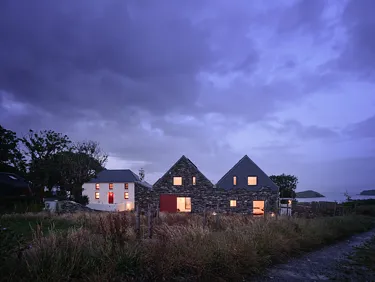
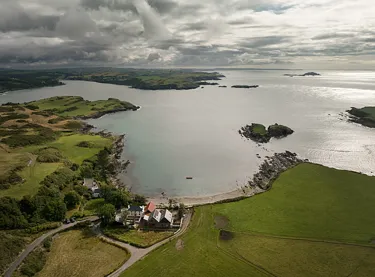
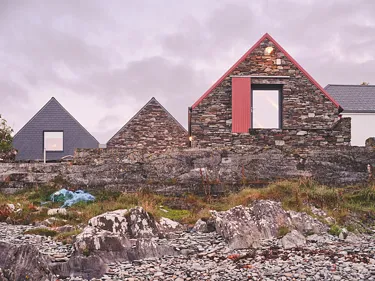
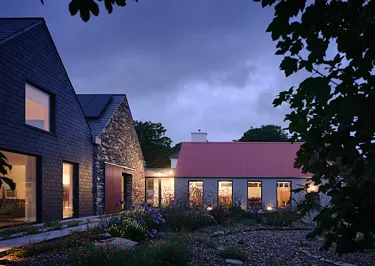
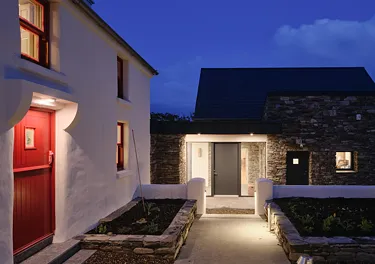
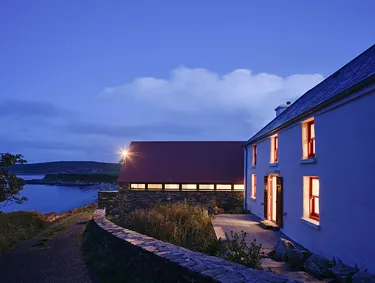
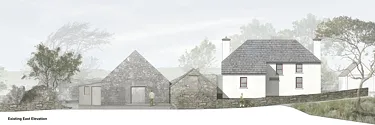
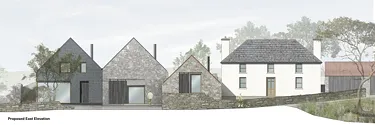
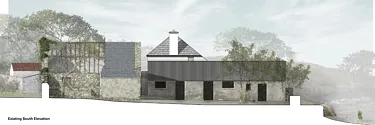
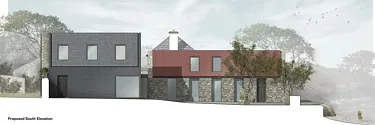
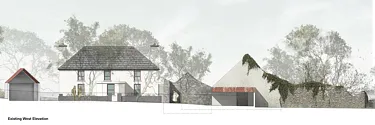
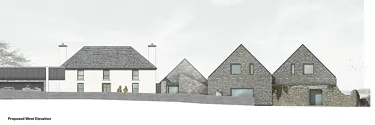
Its exposed location and the local vernacular architecture have influenced the form, colour and materials used, such as corrugated tin and render and celebrating local skills such as stone masonry and the building’s former agricultural use.
New-build elements are timber-framed and manufactured off-site reducing construction time and waste.
Conventional fuel sources have been avoided using air-source heat pumps and photo-voltaic panels to generate renewable energy. These complement the ‘fabric first’ approach that includes high insulation levels minimising energy use and environmental impact.
Planning permission was won in 2019 and the home completed during the pandemic. Structural engineers were Tanners.