Neighbourly response in suburbia
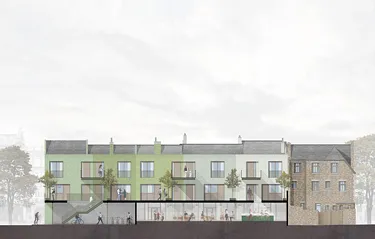
GM Developments commissioned HAL to do a feasibility study to develop new housing for a site adjacent to Barnes Hospital in south-west London.
Beyond the fringe at Bishopsgate
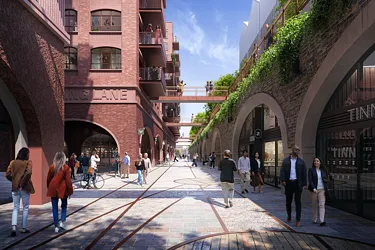
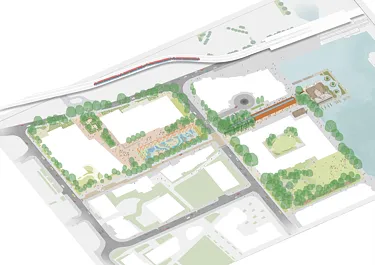
Developers Hammerson and Ballymore are finalising plans for The Goodsyard, the mixed-use regeneration of Bishopsgate Goodsyard, central London’s largest and last remaining undeveloped sites, bridging between Hackney and Tower Hamlets, Shoreditch, Banglatown and the City of London. The huge site has been derelict since 1964.
Marker for Thames-side scheme
‘Blackwall Blockhouse’ was the name chosen for a colourful proposal for a three- storey marketing suite and visitor centre - a marker building for a prominent Thames-side site, where Hadley Property Group is refining plans for c.900 homes, primary school and community hub.
Bakery, event space and marketing gallery
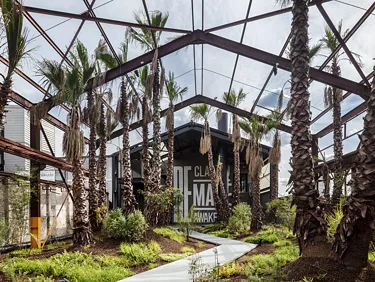
On the riverside, HAL designed the scheme’s new sales gallery housed in a converted industrial shed, including a new events space, bakery and café pulling people into the site and down to the river.
The Big Blue - Putting The Project On The Map
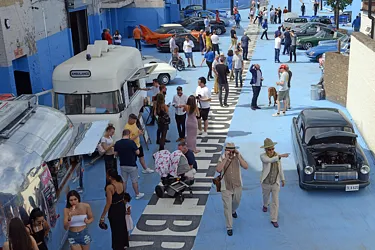
‘The Big Blue’ transformed the site’s presence in the town centre. Bright blue paint, marking the high-water mark of Brentford’s historic flood, was applied to the lane and buildings leading from the High Street down to the waterside. It was very effective in attracting people down to sample the new café and bakery, and to view the marketing gallery.
Canary Wharf’s ‘Iles Flottantes’
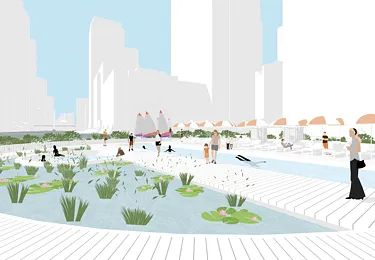
A feasibility study for Canary Wharf Group looked at creating four floating, intersecting ‘lily pad’ islands at the eastern end of Canary Wharf on the south side of Wood Wharf.
The start of something bigger
Phase 1 was conceived before the 2008 crash and includes buildings by HAL (formerly FLACQ), AHMM and FCB Studios.
The layout of the phase was a collaborative effort to adjust an earlier masterplan by Farrells. ‘Pushing and pulling’ the apartment building forms enabled the creation of New Union Square. HAL designed two of the four buildings that make up the Capital Building to the west of the square, one for Peabody with shared-ownership apartments, the other for market sale.
Powering the marketing push
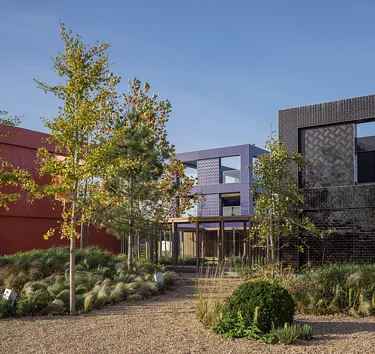
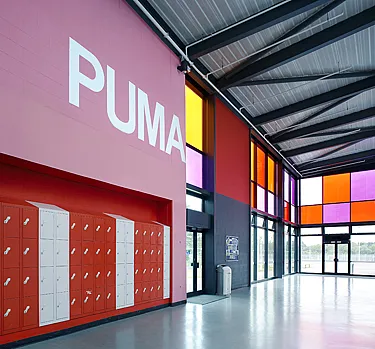
A series of four distinctly coloured pavilions designed by HAL, set around a central courtyard and linked by a covered walkway, became the focus of the sales and marketing campaign for Ecoworld Ballymore’s City Island scheme at the mouth of the River Lea in east London.
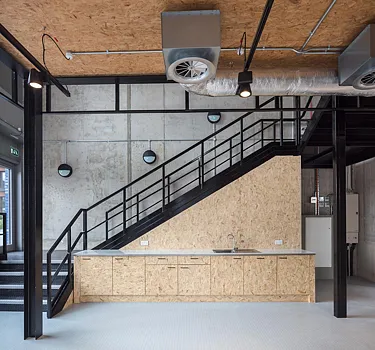
Spaces for creative businesses
The City Island commercial units form part of the ground floor offer for Ecoworld Ballymore’s City Island development on Leamouth Peninsula, adjacent to Canning Town station.
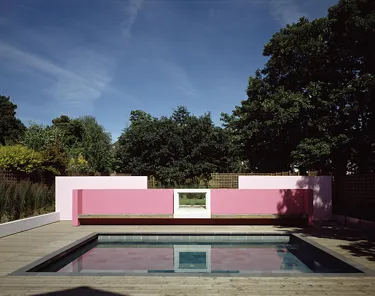
Hot pink warms up Dulwich
The conversion of a large detached neo-Georgian house created a stylish family home.
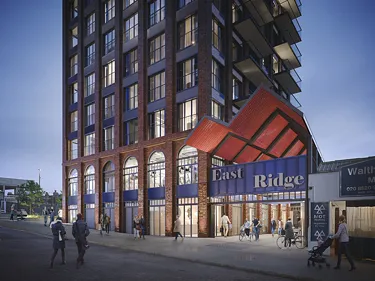
Landmark build-to-rent for Walthamstow
HAL helped Capital Provident Holdings win permission for new 18-storey apartment block on a town centre site in north London
East Ridge is a new 18-storey housing and mixed-use scheme south of Walthamstow Central that will sit alongside new and emerging taller buildings in the popular town centre.
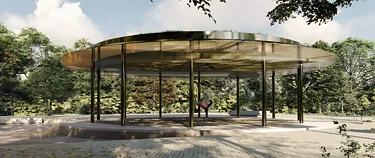
Bring on the bandstand!
HAL Architects designed this contemporary steel circular bandstand to be included in the public realm improvements forming part of Celebration Way in the Athletes Village during the 2012 Olympic Games, and then as a supporting structure for community-led activities and events after the games.
Making a modern neighbourhood
Hal Architects (HAL) has worked on EcoWorld/Ballymore’s Embassy Gardens since 2009, helping to create one of London’s prime new neighbourhoods.
A new place with exotic roots
Ballymore’s transformation of a ‘lost village’ into 841 apartments needed something special to drive its marketing campaign. Orchard Place was a 19th century dockworkers’ ‘village’ that grew up alongside the East India Company’s extension of its Poplar Docks complex into Leamouth in Tower Hamlets.
A diplomatic transformation
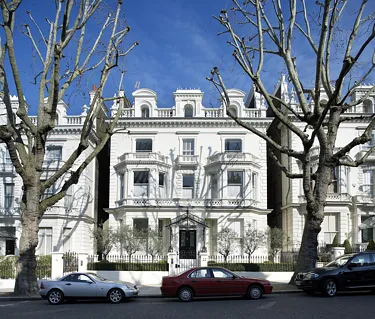
This Grade II-listed former diplomatic building on Holland Park, one of west London’s prime locations, was renovated and converted into a grand five-storey family home.
SIPS panels for South Downs home
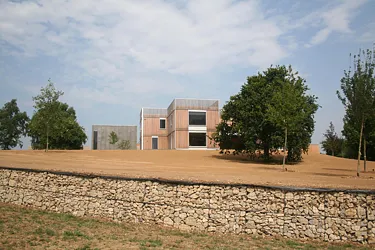
A new large home composed of two elements to replace a 1970s farmhouse building was one of the first to win planning permission since the South Downs National Park was established in 2010.
The Legacy buildings
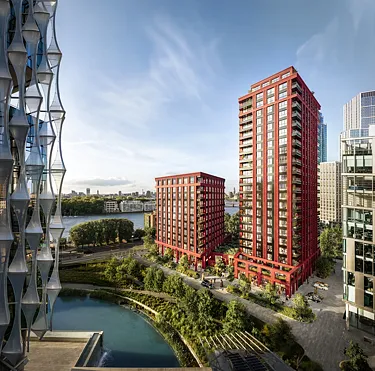
Three conjoined Legacy Buildings form the 900-home second phase and face the US Embassy to the north. The Sky Pool spans between the first two buildings. The central building has a ‘super lobby’, a single entrance for the whole phase where everything connects; concierge, deliveries, meet-and-greet areas and main reception.
Re-animating the High Street
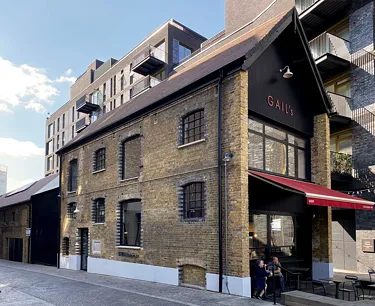
HAL has designed the restoration and conversion of listed buildings to bring new life back to the western end of Brentford High Street on its southern side.
Lighter living in Holland Park
This was the complete remodelling of a 500 sq m, five-bedroom, substantial west London townhouse in Holland Park Conservation Area.
A marketing makeover
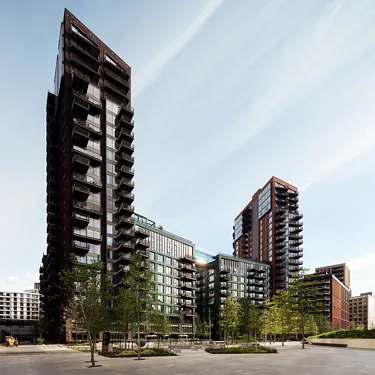
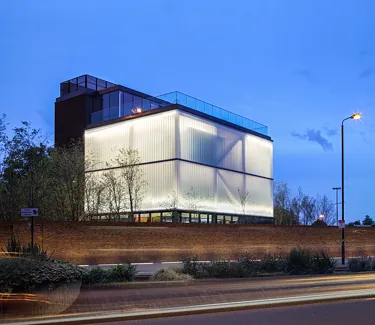
Developer Ballymore asked HAL to create a marketing suite for its high-rise Mill Harbour development on Mastmaker Road with the imaginative re-use of a glass cube projecting over Millwall Dock.
A modern take on the mansion block
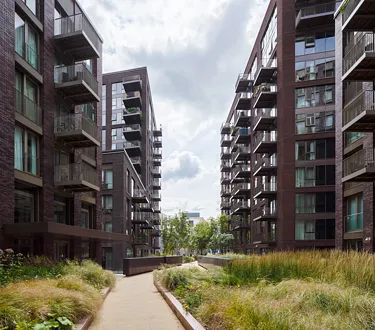
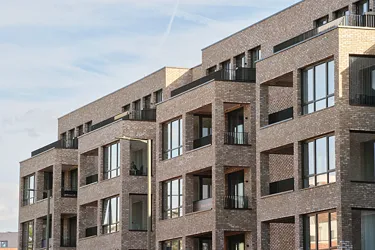
Two new, twinned contemporary mansion blocks developed by GM Developments are unified by finely detailed brick cladding in Whetstone, London N20.
Educational oasis on the green belt
A new secondary school, sixth form and special needs school, designed for the Bristol Education Authority, replaced part of the former Bristol Enterprise College (BEC) campus under the Building Schools for the Future Programme.
Bond-like drama at Royal Wharf
After the success of the earlier very substantial phases of Royal Wharf, Ballymore asked HAL to design a second marketing ‘pavilion’ for the latter phases of the scheme, called Riverscape.
HAL Architects in collaboration with Arup Associates won a competition in 2015 to design a new sales pavilion for the initial phases of Oxley Ballymore’s Royal Wharf development in the Royal Docks overlooking the Thames Barrier Park in east London.
The Royal Wharf pavilion was the first of two radical marketing pavilions for the schem, building on HAL’s expertise in creating a new calibre of such suites for major London housing-led regeneration schemes across the capital.
A pool with a view
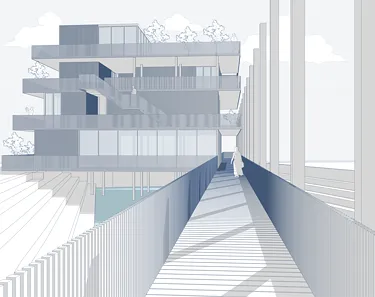
HAL was asked initially to look at a 25m rooftop pool on one of the buildings in phase 2, The Legacy Buildings, but it wouldn’t fit on one rooftop. The idea of a swimmable bridge between two buildings was born. Initial ideas were for an enclosed aqueduct, but views to the US Embassy and beyond demanded something else. Ballymore’s founder Sean Mulryan said: “If we’re going to do this let’s do it properly. It needs to be transparent.”
Building community by design
A scheme for Pegasus Life (now part of Lifestory) combined 44 later-living apartments with a 98-room hotel in two linked blocks of seven and eleven storeys.
Town and Thames get back together
The Brentford Project links Brentford’s High Street back to the Thames, injecting new life into a long-overlooked corner of west London. HAL Architects has worked on Ballymore’s The Brentford Project from it’s early stages.
Setting a benchmark
It all started with a striking marketing pavilion, instrumental in Embassy Gardens’ successful launch in 2012. It was built in 16 weeks and provided a design benchmark for the whole development.
New Pan-Asian supermarket offer!
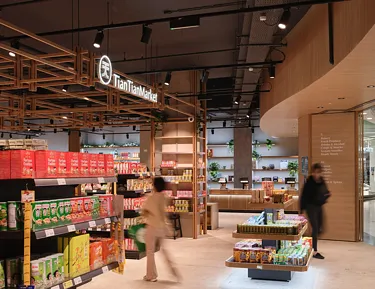
Tian Tian is a rapidly expanding pan-Asian, family-owned, supermarket chain (Tian translates as ‘Heaven’) for which HAL has created an interior ‘brand’ that has been applied to nine new supermarkets all over London, from Acton in the west to Canary Wharf in the east.
Coastal combo’ of old and new
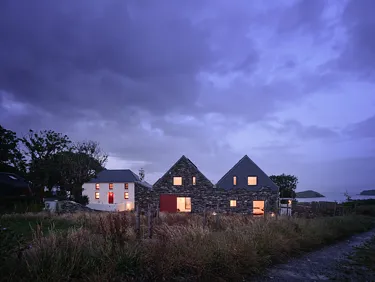
This home on west coast in County Cork combines careful refurbishment, extension and adaption of an existing cottage and outbuildings with new elements.
Scandi-on-the-Wandle
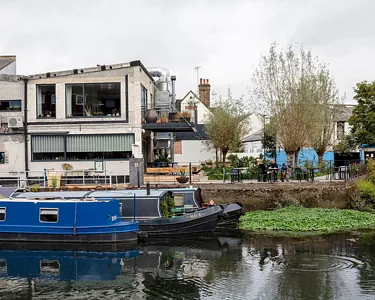
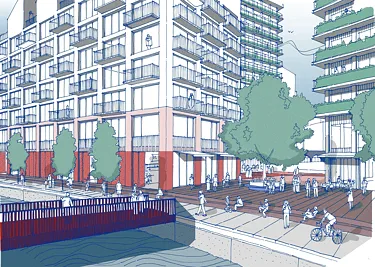
‘Wandlehavn’ was the name HAL gave to a six-block mixed-use regeneration scheme proposed for a disused gasworks site on the River Wandle north of Wandsworth town centre.
The feasibility study for a private developer client proposed six mainly residential blocks with 200-plus apartments and some commercial space, in varied forms, reducing in size from the site’s northern end, overlooking a railway, towards the south. The lower rise blocks saw-tooth roof forms reference surrounding industrial uses.